


Lost in the ’90s, Found on Vinyl: Matt Devine and Ventilator | The TSN Interview

Some records become classics. Others disappear into the cracks of music history, waiting for someone to rediscover them.
Back in 1996, singer, songwriter, and multi-instrumentalist Matt Devine released Reseda Spleen under the name Ventilator. Recorded largely at home on a secondhand Tascam tape machine, it was a wonderfully idiosyncratic collection of power pop, alternative rock, and homemade sonic experimentation. It arrived on CD, earned a modest following, and then quietly slipped out of circulation.
Thirty years later, Bar/None Records has finally brought Reseda Spleen to vinyl for the very first time, giving this overlooked album a second opportunity to find its audience.
But this is more than a story about a reissue. It's about the strange paths records take, the creative freedom of recording at home, and what happens when music made for one moment finds new meaning in another.
Today, Matt Devine joins me to revisit the making of Reseda Spleen, the circumstances that shaped it, and the unlikely pleasure of seeing his bedroom recordings become a vinyl LP three decades later.
Here's my conversation with Matt Devine, on The Sharp Notes Podcast.
This conversation has been lightly edited for readability.
Evan Toth: Congratulations on reissuing Reseda Spleen. You must feel really excited right now that this has re-entered the public consciousness, and it's a physical thing that people can come to stores like this and buy.

Matt Devine: Yeah, it is great. Definitely grabbing victory from the jaws of defeat, as far as something that was out there for a period of time and then kind of disappeared, and was probably as obscure as you could get.
ezt: Without making that a negative, what's it like to put so much of yourself into something that you believe is wonderful and watch it flounder over the years? Did you have any questions about it? Were you listening to it going, “Did I do the right thing?” Because, by the way, it's a beautiful album. It's a wonderful record. I really enjoy it myself.
In fact, I was telling my son the other day, he said to me, “Dad, can you tell me about some bands from the '90s that nobody knows?” And I said, “That's my specialty.” So this is exciting, right up my alley. What's your relationship with the album been over the last few decades that it's existed?
md: I've never had a bad view of the record on multiple levels. Having been there and worked on it, and it being what it was before it became Reseda Spleen, when it was just recordings, it was a very idyllic time in my life. My girlfriend, now my wife Linda, and I had just moved in together, and it was a great time. I had a great old apartment in North Hollywood, and it had space for me to set up gear in the second bedroom, which I did.
I really created an environment for myself to be creative. I didn't worry about hanging out, hanging in bars, and joining the rat race of indie rock. I really pulled back from it and said, “I just want to write and I want to record. I want to get to the fun stuff.” Rather than, “Oh, I'll put a band together, then we'll record a demo, and then we'll hopefully get into a studio,” I said, “I want to be creative and record.”
So I've always had a very positive feeling about the record, and I would revisit it from time to time. I'd think of a song and listen to it. It was on Spotify this whole time. I'd enjoy it. It would remind me of something, some funny story or some hanging out. Or I'd listen to some musical decision and go, “Yeah, I'm glad we did that.”
Also, there are moments that sound like the apartment to me. I hear cars driving by on one song. On that same recording, I hear the neighborhood, the ambiance of the neighborhood in it. So it takes me back on that level, too.
ezt: Let's rewind the clock for our listeners who have no idea what we're talking about, and bring them up to speed. The year was 1994, and you were in another band, and you felt like it was time for you to do something on your own. What was happening then that made you decide, “Hey, I want to make something that's really entirely mine”?
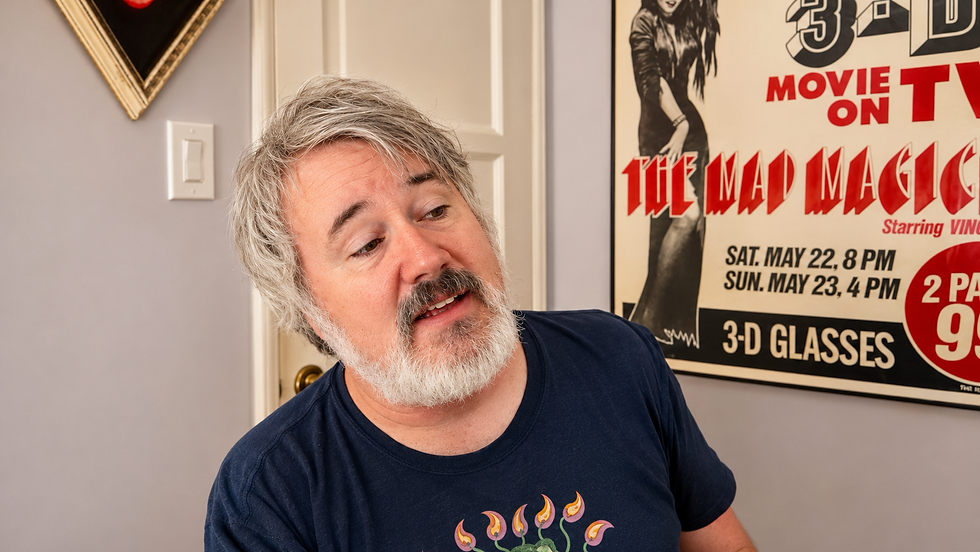
md: In '94, that was the last year I was in Permanent Green Light, which was the band before Ventilator. I had gotten the machine, the Tascam 388, in early '94, January or February. I was learning how to use it, and we used it on a couple demos with Permanent Green Light. I had Michael over, and we tracked stuff. But I got more and more immersed in learning the machine: I need a compressor, I need to get the right speed, I need to get some good speakers.
ezt: As you go through that description, explain for folks who are listening who may not understand: What's unique about a Tascam 388? What was interesting about having it in the second bedroom of your apartment that helped you create the unique sound on this record? Why do people care about the Tascam 388?
md: A Tascam 388 is an analog reel-to-reel machine. It has eight tracks. It's quarter-inch. It's moving just fast enough to sound good, seven-and-a-half IPS, I think. This isn't a cassette four-track, which is what I had previously recorded demos on. This is something that had a level of fidelity, and eight tracks, which was a big deal, being able to jump up from four to eight.
I was able to record and have something sound a certain way. It didn't sound like Abbey Road, of course, or Aja by Steely Dan, but it had a character to it. It sounded like what it is: this machine. And I got this terrific compressor on the cheap, and it had all the right buttons and settings, attack and release, that I needed.
The first song I recorded where I was like, “Okay, this is sounding good back to me,” was a song on the second side called “Lint Duet.” It's the one where you hear the cars at the beginning. You hear cars go by because I'm recording acoustics, and using a compressor really brings up the signal. I heard these acoustics back through the speaker, and I'm like, “This sounds really good.”
I felt like I was embracing where I'm recording. I'm recording in an apartment. If I get a car in the background, that's where I'm at. And the compression that's happening with the acoustics, that's my compressor. So I embraced where I was. Having this operable machine that sounded at the quality it did, I got into it and wanted to record more.
Tying it back to Permanent Green Light, the more and more I got into the machine, the less and less I got into hanging out and rehearsing, and I broke away.
ezt: Interesting. I did an interview last week with a longtime musician, a 50- or 60-year musician, who said, “I don't get into the buttons and knobs, and I don't do all that stuff in the studio. I come in, I sing.” You're kind of the opposite. Why do you think that made you, as a musician, someone who, rather than creating the music, also got into the sound? Was there music you listened to when you were younger that was recorded at home, or recorded by a person themselves?
md: I wasn't a technical kid. I had tape recorders that I would monkey around with. If I pressed two buttons, it would play back something slower than what I recorded, and I'd laugh at that, or I'd plug my guitar into a stereo because I didn't have an amp. But I wasn't a technical guy.
I think working with Earle Mankey on the last record that I recorded with him really opened my eyes to the process of recording proper in a studio, where you're overdubbing, which I'd done before. But working with Earle, he would answer my questions and put up with me asking them. Instead of being a technical guy who gravitated to recording, it was more, “I want to do my music and do it at my own pace, at my own time, at my own leisure.”
Do you know the record Something/Anything? by Todd Rundgren?
ezt: I sure do.
md: The inside gatefold where he's there, standing with the—
ezt: On the coffee table.
md: Yeah. Just that space he had. It's like, “Wow, I want that.” I didn't have Clapton's SG or a big wall of eight-track machine happening, but I created a space where I was able to do my thing, and I got into it.
ezt: Back to my conversation with my son the other day. We weren't only talking about '90s music. Some of the bands that came up remind me a little of your sound, and also the notoriety of the album: something that maybe wasn't a huge success at first but had a kind of slow burn. Some of the names that pop into my head are Big Star. He was listening to them and going, “This wasn't a hit?” I'm like, “No, this song is called 'September Gurls.' It was not a hit.” Emitt Rhodes comes to mind a bit, too.
You mentioned Todd Rundgren, but are there other musicians who influenced that sound? Am I on the right track, or maybe I'm not on the right track?
md: For sure, Big Star. There's no question. I heard Big Star in 1987. They did seem like this mysterious band because, pre-internet, you couldn't read about bands. I'd heard about them reading interviews with Paul Westerberg. He talked about Big Star, and then putting two and two together: “Oh, the Bangles are covering 'September Gurls.'”
I found a bootleg of Big Star, of the live performance, at a record store. This was summer of '87. I'm like, “Oh, this is that band. This is the band that Paul Westerberg is talking about.” So I bought it. That was the first Big Star record I got, and then I got the first two albums on import. Big Beat released them in '86.
You did feel like you discovered something that no one—because you put on that record, and it sounds like the Beatles. I was like, “Wow, this sounds incredible.” And the back cover of #1 Record, where they're in the shadows just sitting there, really had a vibe. I'd known of Alex Chilton from producing the Cramps and the No Sex EP.
Big Star were a special band to me, for sure. And I'd say, like I mentioned, Westerberg, the Replacements, Redd Kross, and Hüsker Dü, all those bands when I was a teenager in the '80s that I loved because of guitars. Rock and roll guitars.
ezt: Yeah, great guitars. Those records were where I went from piano. I always liked to hear piano, and then all of a sudden I was like, “Wow, these guys went the extra mile.” Back to Big Star again, all those trebly Strat sounds, whatever they were doing in there. It must have been loud in Ardent Studios.
md: Some of the best records ever, those three Big Star records, each in their own way.
What's interesting, too, is definitely a level of obscurity there, but they were reviewed in Rolling Stone at the time. That must have been a weird place for those guys to get those kinds of accolades, and then Chris Bell leaving and going to work at his parents' restaurant, at Danver's, right? That must have been a pretty heavy thing for him to deal with. But super glad he did “I Am the Cosmos.”

ezt: What a great song. Of course, Omnivore has that great compilation, because he didn't really have a proper album out during his lifetime. It was a couple of singles, but he's my favorite. If you're a John or a Paul guy, or you're a Chris or an Alex, I'm a Chris Bell guy.
md: Did you read the book on him?
ezt: No, I didn't.
md: Rich Tupica wrote a book on Chris Bell and Big Star. I highly recommend that. It's very moving.
ezt: It's interesting you bring up the initial response to Big Star and Rolling Stone. Talk to me a little bit about the buzz on Reseda Spleen when it came out. I often interview people and say, “What are you doing to support the album?” If you had to go in your Wayback Machine and think about when the album came out, what was that time like? What were you doing? How were you trying to get it out there? What was some of the feedback you were receiving?
md: The record got pressed up, and there was some word of mouth with a few people in L.A., nothing significant. But there were a couple labels that were interested, one or two more than others. Nothing really manifested itself for the reasons that it did, and that's fine. That's how the cookie crumbles.
It changed because I had recorded Reseda Spleen, and Jeff and Byron contributed to it, and it was what it was with the music. Then, as folks heard the record, people in L.A., there would be a question: “When are you playing live?” And then it morphed into, “What do you want to do? Where do you want to record? Do you want to record in a real studio?” Some of that was me asking myself that, too: “What am I doing here? Am I on point?”
It changed. That wasn't what Reseda Spleen was about. Reseda Spleen was really me removing myself from all that music-industry stuff. After Reseda Spleen came out, there wasn't anything really special about the release. It was kind of an indie-rock sob story: a record coming out and not really getting any attention.
I kept recording on the machine. Concurrently with that, I got asked by my friends in Possum Dixon to help them with their record, their last record on Interscope, and that was over a year of that. So I moved on. Rather than cry in my beer, I soldiered on.
ezt: Back to the recording. You're recording this in your apartment, hopefully your neighbors didn't call the police too many times because your Fender Twin was on level nine and peeling paint off the walls. But, as you say, it was very much your project, and you did have some friends helping you out. You mentioned some names. I hope I pronounced them right: Byron Reynolds, Jeff Caruana, Brad Laner, and Earle Mankey. Earle, of course, was the producer on previous albums, correct?
md: He produced the Permanent Green Light record Against Nature.
ezt: What do you remember about how they augmented your solo direction at that time?
md: With Jeff Caruana, we were in a band together before Ventilator, and it was my first band. Jeff has always been a friend, and he was also a sounding board. I'd show him songs that I'd written, and he was the guy listening to early mixes. Getting that support is really helpful for a songwriter, to have someone listen to your stuff, someone you trust who has great taste.
Byron, I was introduced to him by Robert Sullivan, who was in Possum Dixon. At the time, Byron wasn't playing with Possum Dixon, but he recommended Byron. We got together, and immediately Byron overdubbed on a song in the apartment called “Lansdowne.” It was such a positive experience. I said, “Let's move the gear to a friend's house and turn it up, to get the drums really loud.”
That made it real. That made it less of me recording acoustic songs and experiments and more, “Okay, I need to track scratch guitar and get the drums and record drums as best as I can.” That really elevated it to becoming a record.
Brad Laner was someone I knew from the Valley. That year, he was in a band called Medicine. He is in a band called Medicine. At the time, they were getting ready to tour for their last record on American, called Her Highness, and he needed a guitar player to play live. I was up for it. He and I got tight, and I was playing him recordings that I was making for Ventilator. I invited him to play bass on a song because he's a great bass player.
There was one song on the record that's experimental, and I was doing these mixes that were really flat. I asked him, “Would you be up for this?” He really made that recording sound as dynamic and cool as it does.
Last but not least is Earle Mankey. Earle produced Against Nature, and we became tight. He really became a mentor to me. He was there to answer questions. I'd say, “Hey, I want to buy a compressor. What does that look like?” I found this compressor through the back pages of a magazine, this ad, and he would give me advice. We'd talk about music and recordings we dug, and he would listen to rough mixes. Then he wound up mixing the record.
I think that captures those four people and what they brought to the record.
ezt: The album moves through power pop, psychedelia, acoustic material. There's lap steel, tape experiments, and some weird sonic territory, too. Without sounding unrelated, it sounds very much like an album. When you were making it, do you recall having a clear picture of what you thought a Ventilator record might sound like, or did that emerge track by track? What do you remember about the initial planning of the album?
md: I didn't get hung up that the songs had to have the same guitar sound, or had to have the same reverb on them, or that they all needed to rock. I was creative, and it was whatever served the song best. There are a couple songs that are acoustic, and I went, “Okay, this is it. This is an acoustic song.” Other ones, I would start to visualize being more of a rock-and-roll thing. Of course Byron came on board, and then it became that. I didn't really worry about it.
I've always been envious of records like the first Doors record, where every song has the same space that it occupies and the same reverb throughout. It just sounds like the first Doors record.
ezt: A real consistent sound.
md: Yeah. But I also love other records where every song is a different thing. I didn't set limitations on myself. The only limitations were the eight tracks. I didn't have a ninth track. That was my limitation.
ezt: I guess you could bounce them down. Were you able to bounce down on that?
md: I did. The recordings I did after Reseda Spleen were later released on a label in Austin about ten years later, and it was released under the name Rock Folk Suicide. That was the name of the second Ventilator record. That was me pushing the machine more.
I'd record a guitar, pitch the machine down and record the guitar solo, and then turn it up. I'd do a vocal high and then turn it down low. I'd bounce and treat guitars. The sound would degrade when you would bounce. There were only so many goes I could do with it, and I'd one-shot it because once I erased the original, it was gone. So at the expense of fidelity, I was getting weird.
ezt: Thinking about recording today, digitally, you have 90 kajillion tracks available. What do you think the limitations of the eight-track brought as a positive to that recording? How did it make you think differently about putting music down, being selective, and being picky about what you were doing? What were some of the pros and cons of the limitations?
md: The pros would be that you need to make decisions more on the front end about how things are sounding, because you're committing it to tape. You have to embrace the commitment of, “Okay, this is tracked, and this is how it is,” versus nowadays in digital, where you can track a guitar and then change the amp sound and change the level of distortion.
That would be a con: once you print it, it's there, and that's what it is. For me, with Reseda Spleen, having that limitation worked because I wanted to get these songs across. There's a certain economy with that that maybe served the song.
When I was doing the songs that made up Rock Folk Suicide, that was where I started. I think those songs sound more—I want to say muddy, but they do have more, a nice way to put it is, more character, because I was bouncing as much as I was, slowing things down and speeding things up and getting psychedelic with it.
There's a lot to say for it. Neither is good or bad. It's just different ways to work. The other big difference is working in a linear fashion, where you hit play and the tape starts moving, and you have to wait for that part to punch in. I'm there with the guitar by myself, and I'm using my toe to hit record so I can play at the same time, punch myself in.
With a computer, you can set it to loop and wait for it to get to that part, and then play it five or six times, and then, “Oh, that's the take.” Cut it in. Again, I'm not criticizing. It's a different way to work, and it's valid. But it is different with analog.
ezt: The songs, especially things like “Taylor's Lament,” “Happy New Year,” “Hands Down,” sort of carry a little excitement about starting over. Thematically, how autobiographical were these tunes? Am I reading too much into it, or were you talking about where you were at that time?
md: I'd say that you're correct that they are autobiographical, or they might have some element in my life. The song “Jericho's Pool,” I don't know if you're familiar with that one. It's the last song on the first side. A friend of mine had died of a heroin overdose, and it was awful. It was a terrible thing.
That was the origin of the lyric: writing this story about two people, and one of them dies young, and they're both addicted. It became a story. Maybe it's obscure in the lyrics. I can't say that it's a literal story the way it's presented in the song. But the root of it was something that I experienced and felt in my life, seeing a friend die that way, young.
So, to answer your question, I'd say largely autobiographical. Or personal. That might be a better way to put it.
ezt: The title of the album is interesting, Reseda Spleen. Can you give us a little peek into where you pulled that one from?
md: It's a reference. There's a collection of poems by Charles Baudelaire called Paris Spleen, and “spleen” being this discontent, this feeling he felt walking the streets of Paris. There's a city called Reseda in the center of the San Fernando Valley, and there's no more different place in the world from Paris than Reseda. So it's a gag.
I lived in Reseda for a few years after I graduated high school, and there was cool stuff there. There was Bebop Records, which was a cool live space. It was the first space I ever performed in a band. There was Record Trader, an awesome record store back when everyone got rid of their records to buy CDs. It was insane, the records I would find. Mono Stones records, or Love records.
And then the Country Club was in Reseda, which was the first time I saw the Replacements, in July of '87. I have a fondness for Reseda and the Valley because I grew up in the Valley. I love the Valley. But it's funny to call the record Reseda Spleen in reference to Baudelaire.
ezt: You sound like you're quite a record shopper, and you've probably got a collection. Want to tell me a little about what you have, or your journey through vinyl over the years?
md: Absolutely. Buying records—I was more of the kid who didn't really go to—I went to live shows, but more I was going to record stores and buying used records. I do it less now because there's only so much I can do to keep up.
It's funny, there's someone I know who's a mad record collector, and he would find some Japanese version of a Lou Reed record and say, “This is a better pressing than the original on RCA.” And I'd be like, “Mine's the Best Buy version. It's the version I bought at Moby Disc when I was 16. Why do I need to replace it?”
I get more attached to the memory of buying the record. It was my record I got when I was in this spot in life, or when I was a teenager. So I wasn't an aggressive record collector, but I would buy records.
ezt: And now you've finally got this physical artifact. The album is on vinyl, which must feel exciting.
md: Yeah, it's cool, for sure. Thank you to Glenn Morrow and Bar/None for making it happen. It sounds really good. It was remastered by Michael Graves. You know Michael Graves?
ezt: I know him very well. I've interviewed him several times, and he, in fact, mastered one of my albums.
md: Oh, cool. Awesome. I'm sure it sounds great.
ezt: Because he's good at this stuff. I always joke with him: every time I turn around, he's winning a Grammy for something.
md: Yeah. What I love, too, is that live Big Star bootleg I told you about, which was the first record I bought of the band. He remastered that for Omnivore a few years ago when it came out, which I love. The 18-year-old Matt Devine who bought that would be very impressed that the guy who was remastering Big Star is doing my record.
What's cool with Bar/None is there was a conversation about what color vinyl I wanted. I'm like, “Oh, I want black,” because every record I bought when I was a kid was all black vinyl. I don't know if you recognize the label, but we were emulating a white-label promo.
ezt: I don't have it in my hands yet. It's coming, I think, but I'll check.
md: I have a Television white-label promo of Marquee Moon.
ezt: I do, too, by the way.
md: Right on. An excellent record, and great to have a white-label promo. The designer, Rachel Gutek, who's an amazing designer, I asked, “Can you emulate this white-label promo from this Television record?” Because buying records, you'd look at the vinyl, and what cooler thing than getting a used record and going, “Oh, this is a white-label promo.” So we were trying to reproduce that feeling with my own record somehow.

ezt: That's very cool. Tell me how the record traveled to Glenn Morrow and Bar/None, and how this resurgence in the album came about all these years later.
md: Last year, I was aware that it was going to be 30 years, and I was like, “Wow, 30 years since that record came out.” I thought it would be cool if something happened with it again, like some reissue.
I was talking to a friend, John Strohm. He was in Blake Babies and the Lemonheads, and he's a lawyer now, and he's an excellent guy. I had a conversation with him about how I'd like to see that happen somehow, and he said, “I'd like to help you.” And I'm like, “Great, that's awesome.”
Coincidentally, Glenn Morrow called, and we hadn't talked in years. We caught up, and he had recently listened to the record. He was sharing his appreciation for it because he heard it back then, and he was interested in picking it up. It didn't happen for the reasons it didn't happen. He shared his appreciation last year for the record, and I told him, “You should have released it back then. That should have happened.” He said, “Well, maybe I'll release it now.” I said, “Great.”

That's how it came together. It was very organic. There were no machinations and pressing CD-Rs to get it out there, sharing files. It was really Glenn demonstrating an interest and me saying, “That would be great.”
ezt: There's an interesting little tidbit there. I guess there's some quote from Glenn saying he had some kind of promo tape, and he'd listen to it every so often. There's something poetic about him listening to it in the car on a rainy night and finally being convinced that it needed to be shared with a new audience in the 21st century.
md: Which is very flattering, because Glenn has such great taste, and he's a songwriter himself. He's been releasing records on Bar/None for 30, 40 years. To see it come out and look as great as it does, because of the design work Rachel did and the quality of the pressing—and they got Dan Epstein, who's a terrific writer. He did the Redd Kross memoir that came out recently. That's terrific. He did the liner notes for Reseda Spleen.
The team that came together and the level of care that was taken by Bar/None, it really means a lot.
ezt: And, of course, New Jersey-based, right here in New Jersey.
md: Yeah. I haven't spent a lot of time in New Jersey. My friend Chris O'Donovan is in a terrific band called Wild Carnation. He's a New Jersey guy. I visited him a couple of years back and was hanging out there in New Jersey. But I have lots of family in New York. I was born on Long Island.
ezt: Where on Long Island?
md: Nesconset. Would that be—?
ezt: Nesconset. My wife is from Oceanside.
md: Okay. We went to check out—with Chris, we drove out on Long Island, saw my childhood home, which I hadn't seen since I was two and a half, so I have no memory of it. Then we drove to see where Lou Reed lived.
ezt: Oh, that's right.
md: That's the extent of my Long Island experience, for the most part. But I'm a San Fernando Valley guy. My parents and I moved here when I was two and a half, to North Hollywood.
ezt: And you're in California now? Still in the Valley?
md: Still in the Valley.
ezt: Holding strong in the Valley.
md: I try to leave, but they keep pulling me back.
ezt: It's like The Godfather Part III. What's the reception been since its October reanimation in 2026? What are some things you've heard or felt from people about it being released again?
md: It's early because it just came out, so as far as me speaking to some profound experience, I can't. But I've been doing a lot of interviews that they've been setting up for me, yourself included. That's been a very positive experience, talking to people like yourself.
It seems like the folks talking to me have listened to the record. They aren't checking the box by interviewing me. They've listened to it, and they seem to appreciate it. That's made it nice, because I'm talking about something that was 30 years ago, so it's a little weird. Everyone's been great in that space.
Really, the thing with Reseda Spleen is we've been enjoying it happening, and the level of gratitude that it came together and that Bar/None made this happen for the music. Jeff and Byron and I are happy it's happening. We've been spending more time together, hanging out. We've always stayed in touch, but we've been getting together and playing music again, enjoying that and being grateful that it came together.
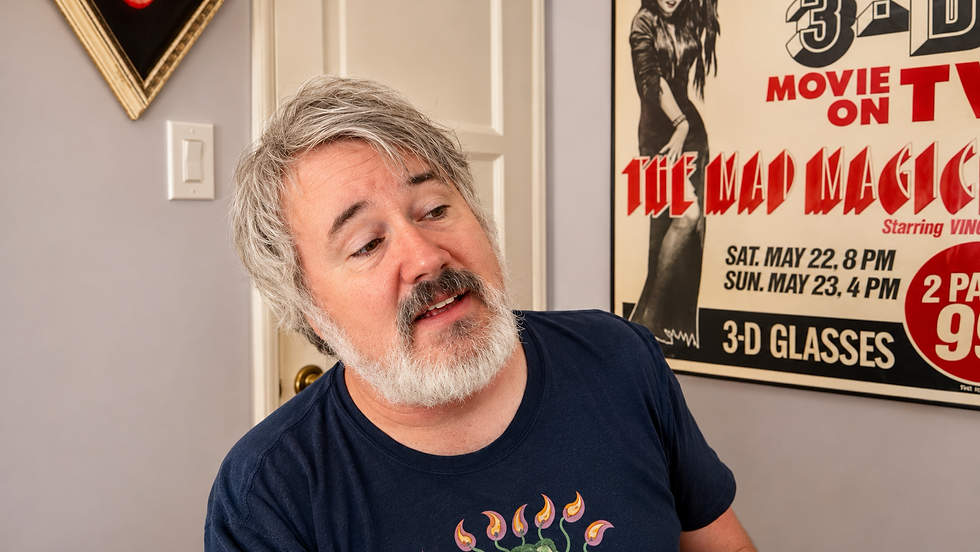
ezt: What else are you planning with the promotion of this album? Are there performances or ideas to do something with the music on the album? Where are we going?
md: There's nothing planned, and we're not really worried about it right now, because that's a whole different thing: getting out there and playing in clubs, and who are we going to play with, and when and where? It's real, and it's so different than what it was to me.
But we're enjoying each other's company and enjoying playing music. What I've been saying to answer that question is, if someone expresses interest who digs the record and wants to see us perform, I will be ready for that. That's how we're approaching it.
ezt: Okay, I like that. Well, being ready—
md: We'll see. Don't hold me to that. We'll be ready to the degree that we're ready. That's my cop-out.
ezt: You've got to be ready. You've got to start from a ready position. That's all you can do.
All I want to do is apologize for not being savvy enough to buy this record on CD in 1996, because 1996 me would have loved this album, just as 2026 me loves this album. This would have been one of my favorites. I would have enjoyed bragging to everyone for 30 years that you've got to listen to this. I wish I was one of those guys who said, “You've got to listen to this Reseda Spleen album,” and I missed the boat on that. So that's my apology. I'll end this interview with an apology to you.
md: Well, then I'll end it with a thank you for listening now. I appreciate that, and your time here talking to me and asking me about the record.
ezt: You're very welcome. Seriously, it's too bad that sometimes you've got a story here with this album that was 30 years in the making. It's interesting how you wouldn't be able to tell a story about this record back then without that nostalgia. Not necessarily nostalgia, but the ability to reflect on it in the way that you can 30 years later. That's an interesting thing.
md: It's funny what you said there, because back then, recording on the Tascam 388, I think there was a little bit of, “What's he doing? Why is he doing this in his apartment and recording?” Now what I'm getting is, “Wow, you recorded that all in your apartment on a Tascam 388.” So that's cool. That's nice.
It certainly helps with something to talk about, because back then no one really asked me much. I got positive feedback on the music back then, but it's nice to talk about the machine and the work that went into it.
ezt: Thanks again for your time. I really appreciate it. I really enjoy the album, and I wish you the best of luck. I can't wait to see how the 2026 version of the album flows in the world.
md: Thanks, Evan. I appreciate it.


