


Interview: Lionmilk’s “When the Flowers Bloom”: Process, Community, and Moving Forward

Lionmilk’s When the Flowers Bloom is a record shaped by change. Written during a period of loss, isolation, and personal recalibration, the album reflects Moki Kawaguchi’s way of working through those moments without turning them into spectacle. There’s an ease to the writing and arranging that occasionally recalls Vince Guaraldi’s melodic clarity, and at times even the softer, inward-looking moments of the Beach Boys, where emotional weight is carried lightly rather than underlined.
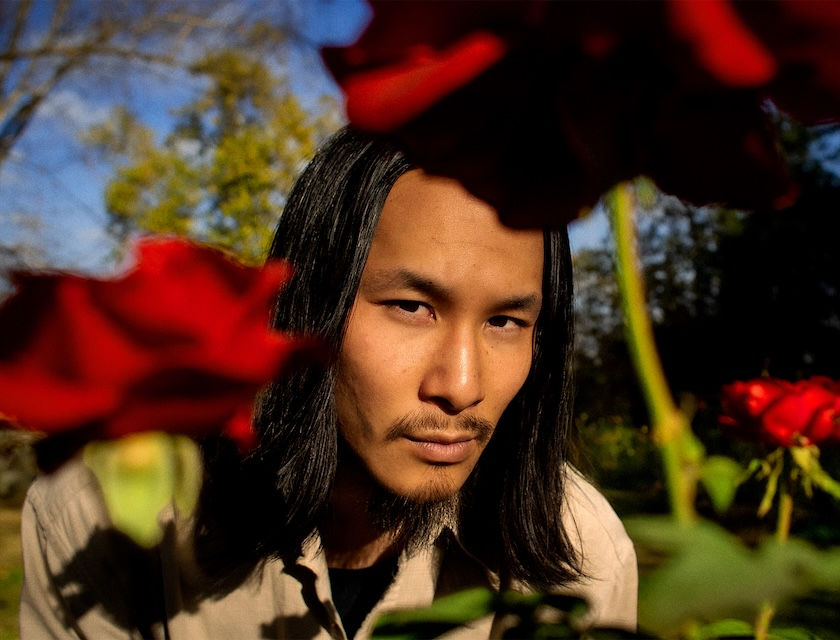
Kawaguchi has long been part of the connective tissue of Los Angeles’ jazz and electronic scenes, balancing collaborative work with friends like Mndsgn and John Carroll Kirby alongside his own evolving voice as Lionmilk. Although When the Flowers Bloom was largely made alone, it’s informed by constant dialogue, shaped by feedback from trusted collaborators and refined through an ongoing exchange of ideas. The result feels communal without being busy, personal without becoming insular.
At its core, the album reflects a commitment to honesty. Kawaguchi often cites Bill Evans’ belief in authenticity as a guiding principle, and that ethic carries through these songs. It also comes through in the physical presentation. The pressing is excellent, warm, quiet, and well-matched to the record’s tonal balance, rewarding close listening. In the conversation that follows, Kawaguchi discusses influence, process, and personal growth, offering insight into how When the Flowers Bloom became both a marker of where he’s been and a thoughtful step forward.
ezt: "When the Flowers Bloom" is a hopeful title. What does ‘blooming’ mean to you, especially in the context of loss and healing?
mk: The title reflects the seasons of life. How we have moments of bloom and decay. Blooming to me is when life lessons and occurrences run their course and I am able to come out of it as a different person.
ezt: The album draws from big band jazz, Brazilian samba, indie rock, and beyond—how do you decide what sounds make it into the Lionmilk universe?
mk: I love all kinds of music and it all blends together in my head. I get obsessive with what I listen to and I start to hear songs in that style. I feel a certain mood then the song pops out
ezt: Can you share some specific musician influences or albums that you’d love other people to know about? Personal favorite of yours?
mk: I love Joao Donato and his album Quem e Quem. I think I was subconsciously trying to recreate that warm sound he had on that record. Alice Coltrane is someone I look up to, she creates music for divinity and that was a huge inspiration on how to approach music. Milton Nascimento runs around in my mind all the time, his vocals on the album Travessia was a big inspiration for me. Anita Baker was a daily listen for a while. I really resonated with her vocal delivery and range, so silky and warm. D'Angelo is always in rotation, and you already know why.
ezt: You’ve said that music-making is one of the greatest blessings. When did that realization first hit you in your life?
mk: That hit me when I was a kid and was going through some family instability. I was a shy kid and kept to myself a lot. Writing music was a way for me to express myself and get through emotional hurdles.
ezt: One of your influences, Bill Evans, talked about honesty in playing. For you, what does musical honesty feel like when you're in the studio alone versus when you're playing with your quartet?
mk: When I'm alone, I feel like writing a journal entry. Let it out, sift through it and find what works. with the band, it feels being a part of a body. It feels like we are all bringing our special something to the table and forming Voltron. Each member of the quartet is so unique and special in their own way that it really makes the music alive. they are all my good friends, so it's just a lot of fun.
ezt: Your tribute to your recently departed Uncle Tom in “Tom is in Heaven” feels like both a jazz eulogy and a love letter. How did that song come together emotionally and musically?
mk: Tom was a family friend who introduced me to the likes of Duke Ellington, Billie Holiday and Count Basie through his many CD's and cassettes he would make for us. I wanted to get that swing era sound for him. I heard of his passing and immediately wrote the track that night.

ezt: You’ve collaborated with other artists like Mndsgn and John Carroll Kirby: what have those friendships taught you about your own sound?
mk: Ringgo has taught me a lot. So many things, not just musical. It's too many to name. Mixing, harmony, all sorts of music, so many things. I'm really blessed to call him a friend over the years. John has enlightened me with what you can do with a synthesizer. His synth sounds are nasty, made me realize that the filter can really do some crazy things.
ezt: This is your Stones Throw debut. Did that change the stakes or your approach at all, or did you approach this record with the same homegrown Lionmilk spirit?
mk: To be honest this album has been done for about 5 years so it’s been the same approach as always. I decided not to release it during that time because of Covid. Around 2023 Stones Throw reached out and we started talking.
ezt: How do you balance the role of musical archivist (paying homage to jazz legends) with that of a sonic explorer (dabbling in indie, lo-fi, etc.)?
mk: I'm just a music lover, I just absorb all I can. I can't help but let the music live in me and funnel into the work.
ezt: As someone who wrote, played, and produced everything yourself, where do you find the most joy in the process and what’s the part that is most challenging for you?
mk: I enjoy the process of recording, writing and performing the most. Promoting myself has been a challenge for me.

ezt: For young artists navigating grief, heartbreak, or creative doubt, what advice would you pass along from your own journey through this album?
mk: I think honesty and joy is key. Translate that into whatever creative outlet you can get your hands on. Surround yourself with people who inspire you. Do your best, keep trying, keep learning and practicing. Know when it's time to let something go.


